Printing intricate, hair-thin line work on dark garments is one of the hardest parts of textile screen printing. Bold block graphics are forgiving, but fine wave patterns and micro-halftones leave very little margin for error. If your stencil bridges, your underbase shifts even a fraction of a millimeter, or ink additives eat through the emulsion, you lose that sharp print instantly.
Whether you run high-mesh manual presses or automatic lines, clean, soft-hand fine lines hinge on three key areas: underbase strategy, ink chemistry compatibility, and picking the right screen printing photoemulsion.
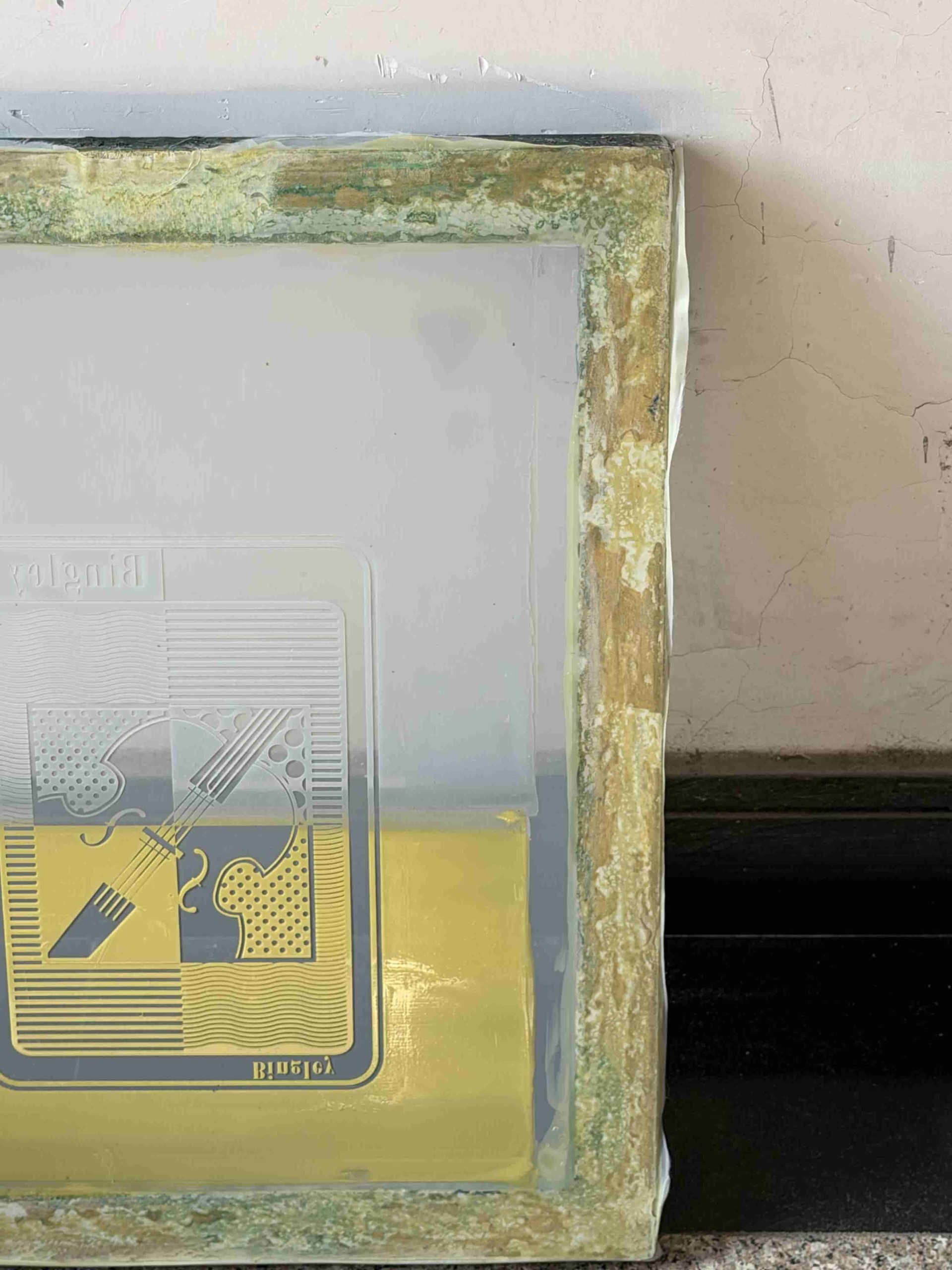
1. Getting a Smooth, Invisible Underbase for Fine Details
When printing light or metallic shades over dark cotton or blended fabrics, rough fabric fibers can easily break up thin lines. Many seasoned printers fix this with a choked underbase—or a tonal underbase matched to your top color—instead of a thick, solid block.
- Lay the fabric weave flat first: A smooth, choked base locks fibers down, so your fine-line screen sits cleanly on top without bleeding into the garment texture.
- Keep the hand feel soft: Mix standard plastisol base with soft-hand and stretch additives to avoid that stiff, plastic-like finish, especially on dense line-art designs.
2. Protecting Your Stencil from Soft-Hand and Puff Additives
This is a common blind spot for many print shops: modified plastisol inks are far tougher on stencils than standard plastisol.
When you add soft-hand reducers, stretch additives, or puff agents, the ink becomes more chemically aggressive and penetrating. Over long runs, lower-grade emulsions can soften, swell, or break down along fine-line edges, leading to ink bleed and wasted prints.
How to stop emulsion breakdown:
- Use a high-solid, solvent- and additive-resistant emulsion: Look for dual-cure or pure photopolymer emulsions built to stand up to plastisol additives and water-based ink systems.
- Get your exposure right: Under-exposed stencils are the main culprit behind fine-line washout. Always use an exposure calculator (step wedge) to confirm full cross-linking from the squeegee side to the substrate side.
- Add post-exposure for long runs: Once your screen is developed and dried, a short post-exposure under UV boosts both chemical and mechanical durability.
3. Why Fine-Line Registration Shifts (And How Emulsion Affects It)
Even if you line up screens carefully with registration marks, center lines, or pre-printed templates, multi-color fine lines can still drift mid-run. Mechanical platen movement gets most of the blame, but stencil stability matters a lot too.
- High-solid content cuts mesh distortion: Emulsions with higher solids (typically 38%–42%+) shrink less while drying, keeping consistent mesh tension across every screen in your multi-color set.
- Low Rz value for a smoother stencil surface: A uniform emulsion coat (using proper 1:1 or 2:1 coating) lets the squeegee run with less pressure. Less mesh deflection means razor-sharp registration on every pull.
Picking the Right Photoemulsion for High-Detail Printing
If your shop regularly runs high-mesh halftones, fine line work, or specialty plastisol blends (soft-hand, stretch, or puff), upgrading your photoemulsion is one of the quickest ways to cut setup time and reduce press rejects.
At Rongsheng Screen Printing Materials (Livex Industrial), we supply factory-direct screen printing consumables and photoemulsions formulated for high-resolution definition and reliable long-run durability:
- High-resolution dual-cure & photopolymer grades (RS1800 / 1400AK-3): Made to hold crisp edges on high-mesh screens without bridging fine details.
- Strong chemical resistance: Handles aggressive plastisol additives, water-based inks, and discharge systems without premature stencil failure.
- Stable viscosity and high solids: Delivers smooth coating, faster drying, and consistent multi-color registration.
Want to test our emulsions on your next fine-line job?
Reach out to our technical team to get free evaluation samples and Technical Data Sheets (TDS) matched to your press setup.
Explore Photoemulsions & Request Samples →