
When screen printers troubleshoot stencil issues on the press floor—whether fine details disappear during washout, edges aren’t sharp, or a stencil breaks down during printing—they usually adjust exposure times or mesh counts first.
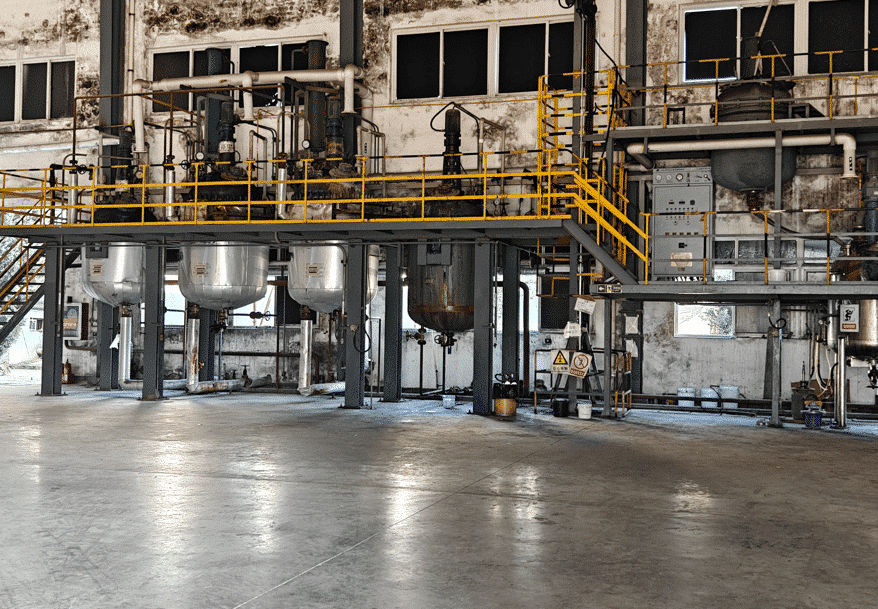
However, consistent performance on the press actually starts long before coating: it begins in the chemical reactor during polymer synthesis. Based on real technical inquiries from international textile distributors, here are the four core manufacturing factors that separate industrial-grade screen printing photo emulsions from standard formulations.
1. Exposure Speed vs. Ultra-Fine Detail Resolution (Up to 80 LPI)
The Shop-Floor Challenge
Printers want fast exposure times to boost pre-press output, yet pushing exposure speeds often narrows exposure latitude—causing fine details to disappear, halftones to clog, or edges that aren’t sharp on high-tension fine mesh.
The Manufacturing Science
Maintaining high resolution without sacrificing exposure latitude comes down to strict solid content control during polymer synthesis. By optimizing resin molecular weight distribution, both RS-1000 and RS-1800 deliver clean, crisp resolution on ultra-fine meshes up to 2000-mesh (80 LPI halftones) without bridging or clogging—with RS-1000 excelling in effortless, ultra-fast washout development.
2. Water Fastness, Zero Swelling & Heavy-Duty Chemical Resistance
The Shop-Floor Challenge
During washout soaking or high-volume water-based textile runs, inferior emulsions absorb water, swell, thicken line widths, or cause the stencil to break down during printing. At the same time, overly rigid stencils become difficult to reclaim.
The Manufacturing Science
By calibrating crosslinking density inside the polymer backbone, our emulsions resist moisture absorption while remaining cleanly reclaimable:
- Zero Water Swelling & 2,000+ Prints: Both RS-1000 and RS-1800 can soak in water for 10 minutes to 1 hour prior to development without softening, swelling, or distorting line width—and easily withstand 2,000+ water-based ink prints without stencil breakdown. While RS-1000 offers unmatched washout ease, RS-1800 is built for maximum mechanical press durability.
- Extreme Heat & Acid/Alkali Resistance: For harsh industrial applications requiring superior resistance against high temperatures, strong acids, and alkalis, RS-1400 provides heavy-duty chemical protection.
3. Darkroom Overnight Stability & Tropical Climate Resistance
The Shop-Floor Challenge
In warm, humid workshops, coated screens left overnight often suffer from premature thermal crosslinking (“dark reaction”), making them impossible to wash out the next morning—while drum viscosity drops during tropical transit, causing uneven coating or emulsion peeling.
The Manufacturing Science
Using temperature-controlled reactors during mixing and polymerization prevents pre-polymerization and locks in thermal stability. Coated screens using RS-1000 or RS-1800 maintain 12 to 24 hours of darkroom/drying cabinet stability overnight with zero dark reaction, washing out cleanly the next day while keeping viscosity stable in tropical climates.
4. Batch-to-Batch Consistency (Zero Color & Viscosity Variance)
The Shop-Floor Challenge
Nothing disrupts a commercial print shop’s workflow faster than opening a new drum of emulsion and finding slight color shifts or viscosity changes that force operators to recalibrate every exposure timer.
The Manufacturing Science
True batch-to-batch consistency isn’t achieved by formula alone—it relies on automated temperature and stirring precision inside the reactor. Automated dosing and closed-loop thermal monitoring eliminate human error, guaranteeing that Drum #1 and Drum #500 share identical solid content, viscosity, and exposure speed.
Technical Performance & Model Selection Matrix
| Model | Core Shared Capabilities | Distinctive Strength / Best Application |
|---|---|---|
| RS-1000 |
• Up to 2000-mesh / 80 LPI crisp resolution • 10–60 min pre-washout water soak with zero swelling • 2,000+ water-based prints without breakdown • 12–24 hr overnight darkroom stability (no dark reaction) |
Effortless Development & Fast Washout: Ideal for shops prioritizing smooth, clean stencil opening and high pre-press efficiency. |
| RS-1800 | Maximum Press Durability: Engineered for extended, high-abrasion production runs requiring extra mechanical toughness. | |
| RS-1400 | High-durability water & chemical resistant polymer backbone | Heat, Acid & Alkali Resistance: Built for harsh industrial printing environments involving elevated temperatures and aggressive chemicals. |
Partner Directly with a Factory-Direct Emulsion Manufacturer
Real chemical manufacturing isn’t just about mixing raw materials; it’s about eliminating uncertainties for distributors and commercial print shops. Explore our full range of Screen Printing Consumables & Photo Emulsions, or contact our export team directly for Technical Data Sheets (TDS) and sample testing:

Pingback: High-Density 3D Water-Based Screen Printing: How to Prevent Stencil Breakdown on 32T & 43T Meshes