What experienced screen printers wish every beginner knew before buying equipment.
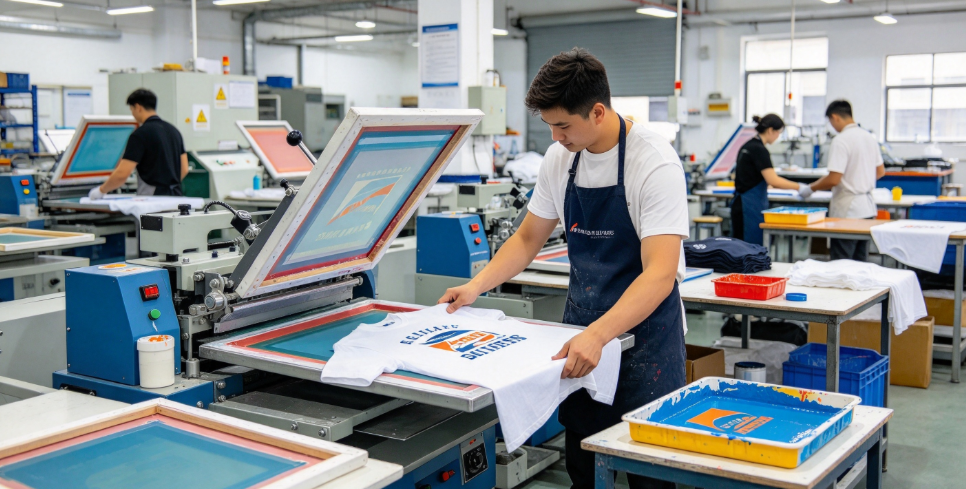
Should You Start a Screen Printing Business or Work in a Print Shop First? What experienced screen printers wish every beginner knew before buying equipment.
Many people enter the screen printing industry with the same question: Should I learn in a professional print shop first, or invest in my own small workshop?
The answer is rarely black and white. Experienced printers agree that both paths can work — but they lead to very different challenges.
Why getting hired is so difficult
A common frustration for beginners is that entry‑level positions often ask for 2–3 years of experience. This creates an obvious problem: how do you gain experience if nobody hires beginners?
Rather than focusing only on equipment, experienced printers recommend understanding the entire production workflow first. That includes:
- Artwork preparation and color separation
- Film output
- Screen coating and photo emulsion application
- Exposure and stencil development
- Ink mixing
- Printing and quality control
Learning these steps inside a production environment helps reduce expensive mistakes later.
Option 1: Learn inside a print shop
Working in a professional print shop usually offers the fastest learning curve.
Instead of paying for every mistake yourself, you learn on commercial jobs using professional equipment and established production procedures. You will also understand how different mesh counts, inks and photo emulsions affect the final print quality.
The downside is obvious: entry‑level wages are usually modest, and production work can involve repetitive tasks and overtime during busy seasons.
Option 2: Start a small home workshop
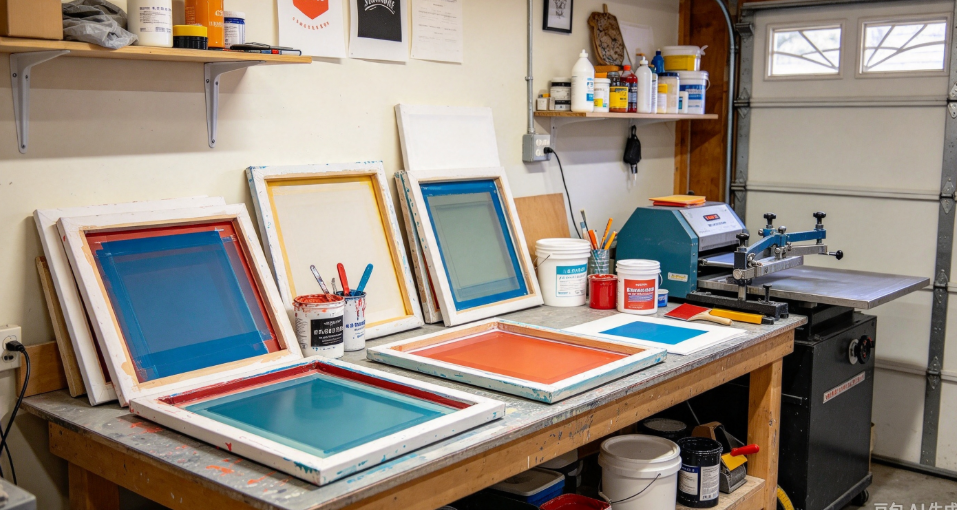
Some printers skip employment entirely and begin with a small home studio.
The advantages include:
- Complete control over your schedule
- Freedom to experiment
- Opportunity to build your own customer base from day one
However, experienced shop owners warn that hidden costs are much larger than most beginners expect. Equipment, failed prints, wasted materials, and slow customer acquisition can make the first year financially challenging.
A small workshop is often better viewed as a long‑term business project rather than a shortcut to quick income.
The skills that increase your value
Interestingly, veteran printers emphasize that expensive equipment is not the biggest advantage.
The most valuable skills include:
- Vector artwork preparation
- Color separation
- Understanding mesh selection
- Consistent exposure control
- Choosing the correct photo emulsion for different applications
These technical abilities improve production efficiency regardless of which machine you use.
Garment printing vs industrial screen printing
Not all screen‑printing businesses serve the same market.
Garment printing focuses on T‑shirts and apparel. Orders are fashion‑driven, the entry barrier is lower, and projects tend to be smaller custom jobs.
Industrial screen printing covers electronics, labels, glass and various industrial parts. It requires higher technical know‑how and serves more specialized production demands.
For many entrepreneurs, industrial work delivers higher technical margins, while garment printing offers an easier starting point for small‑batch custom orders.
Choosing the right photo emulsion
A quality stencil begins with selecting the right photo emulsion.
Rather than searching for one universal “best” product, professional printers evaluate these practical factors:
- Water‑based or solvent‑based ink systems
- Required chemical resistance
- Mesh count
- Target stencil thickness
- Exposure consistency
- Expected production volume
Different printing environments call for different emulsion properties. For that reason, reviewing technical datasheets and running practical test prints is critical before full‑scale production.
Browse our range of screen printing photo emulsions
Final thoughts
If your goal is to build a long‑term screen‑printing business, you may not need to choose strictly between employment and entrepreneurship. Many successful operators combine both approaches.
Learn the full production process, master raw‑material properties, build solid hands‑on skills, and then grow your own customer network with confidence.
In screen printing, knowledge is almost always a better investment than expensive equipment.
Frequently Asked Questions
What is the biggest mistake home-based screen printing beginners make?
Most early-stage failures come from stencil preparation, not the printing press itself. Uneven emulsion coating, incorrect exposure time, and poor mesh preparation often cause pinholes and stencil failure. Running small exposure tests before production can save significant material and time.
Can I learn screen printing at home without working in a print shop?
Yes. Many successful printers start from small home workshops. However, self-learning usually means higher trial-and-error costs because you’ll need to master artwork preparation, screen coating, exposure, reclaiming, and ink handling on your own.
How important is photo emulsion quality in textile screen printing?
A suitable photo emulsion directly affects stencil durability, edge definition, solvent resistance, and production consistency. The best choice depends on your ink system, mesh count, exposure equipment, and production environment rather than simply choosing the most expensive product.
Should beginners start with garment printing or industrial screen printing?
Garment printing generally has a lower entry barrier and is well suited for small custom orders. Industrial screen printing offers higher technical value but requires tighter process control, making it more suitable after building solid production experience.
Need Help Selecting the Right Photo Emulsion?
We support distributors and screen printing manufacturers with product selection, technical documentation, OEM packaging, and export arrangements. Contact LIVEX for technical consultation or trial order information.